Hurricane Damage in Miami-Dade: Fight the Claim or Sell As-Is Before Code Shows Up
Storm-damaged Miami-Dade home? Fight the insurance claim and repair, or sell as-is for cash before BNC opens a file. Real timelines, real numbers, four options.
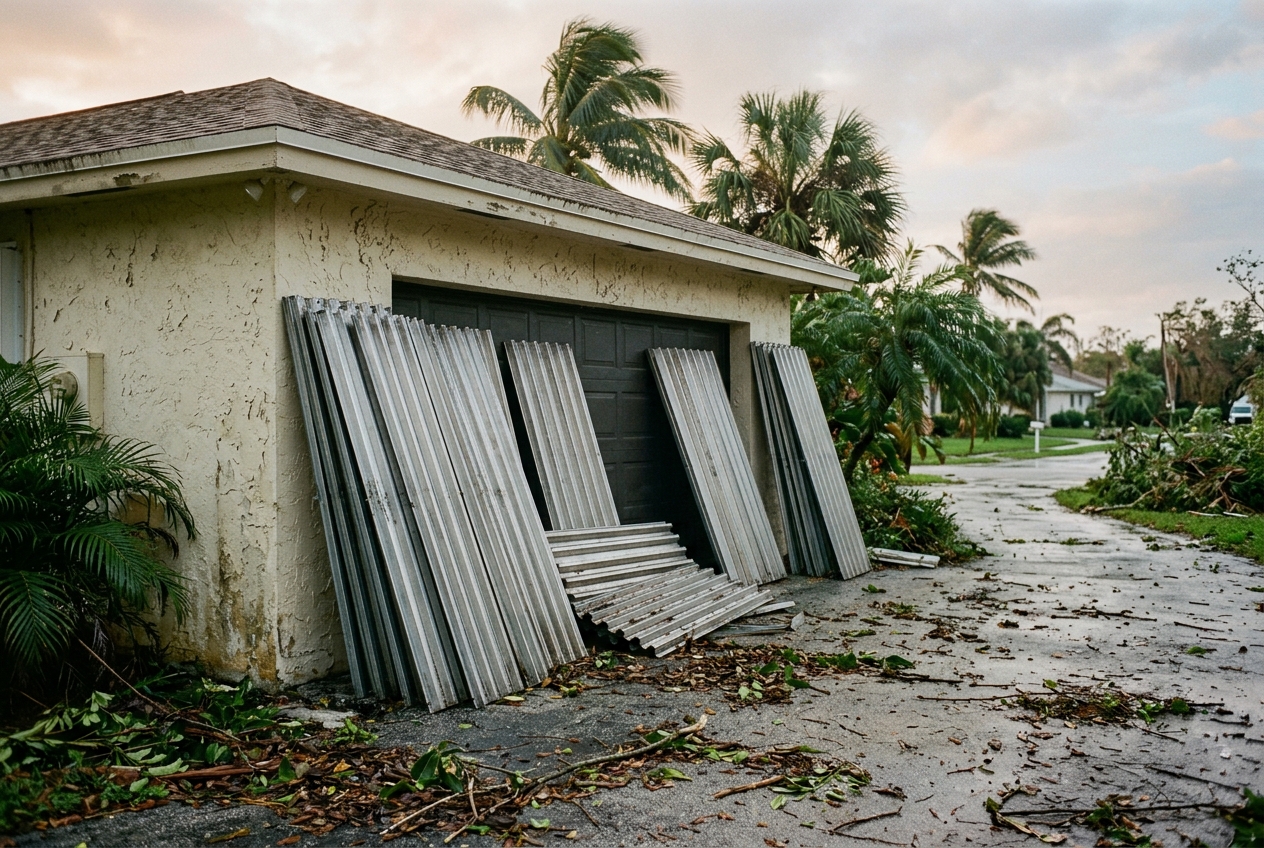
The roof is tarped. The claim is open. Your adjuster hasn't called back in eleven days, and the neighbor already mentioned that someone from the County drove past twice last week.
You're trying to figure out whether to dig in and fight the insurance company for a real check, or take a cash offer now and be done with it before Building & Neighborhood Compliance opens a file on the property.
This is the exact decision most Miami-Dade homeowners face six to twelve weeks after a named storm. Here is how the math actually works.
What the County Sees vs What You See
You see a house you're fixing. You know the tarp is temporary. You know the contractor is coming next month.
The County sees a structure with visible damage from the street. If a neighbor complains, or an inspector drives by on a routine sweep, BNC opens a case. Once that happens, the clock starts, and it does not care about your claim status.
The two systems do not talk to each other. Citizens does not tell BNC you're mid-claim. BNC does not wait for your carrier to cut a check.
The Realistic Insurance Timeline in Florida
Under Florida statute, carriers have 60 days to pay or deny a claim after receiving proof of loss. In practice, after a named storm, it can stretch longer because of volume, adjuster shortages, and supplemental claim fights.
If your carrier lowballs, you're looking at a public adjuster (10-20% of the settlement) or a first-party bad faith attorney (contingency, usually 33-40%). Add three to nine months for that fight.
Meanwhile the tarp degrades. Interior moisture spreads. Mold gets its own line item.
Every month you wait for the insurance fight to resolve, the repair estimate goes up and the County gets closer to opening a case. Both clocks run at the same time.
The Realistic Code Enforcement Timeline
BNC issues a Notice of Violation. You typically get 30 days to comply. If you don't, the case goes to a Special Magistrate hearing, usually scheduled 30 to 60 days out.
At the hearing, the Magistrate can impose fines. Unsafe-structure and lot-clearing-adjacent violations can run $250 per day. If the structure is declared unsafe, you're looking at an Unsafe Structures Board process, and eventually a demolition order if nothing moves.
A lien attaches to the property. It compounds. It does not go away when you sell — it comes out of your proceeds, or it kills the deal.
The Four Real Options
Here's how it actually breaks down for a storm-damaged Miami-Dade house.
| Path | What It Costs You | Realistic Timeline | Who It Fits |
|---|---|---|---|
| Cure it | Deductible + gap between claim payout and real repair cost. Time managing contractors, permits, inspections. | 6-18 months from claim to CO on major repairs. | You have cash reserves, patience, and a contractor you trust. Claim is fair. |
| Fight it | Public adjuster or attorney fee. Months of back-and-forth. Sometimes appraisal or litigation. | 3-12 months on top of the repair timeline. | Carrier lowballed you badly and you have documentation. |
| Sell to us | Discount off retail. But no repairs, no permits, no lien risk, no BNC clock. Cash in seven days. | 7-day close. Everything gets resolved at closing. | You want out. Repairs are bigger than the check. BNC is sniffing around. |
| Ignore it | Fines at $250/day. Lien. Eventually foreclosure on the lien, or the property tax certificate holder forecloses. | 12-36 months to auction, depending on who moves first. | Nobody. This is the accidental path. |
Cure It — When It Actually Works
Cure works when three things line up. Your carrier paid something close to the real number. You have the cash to float the gap. You have the bandwidth to manage a Miami-Dade permit process that was already slow before the storm and is now a queue.
If all three are true, cure. Get the permits pulled fast. A pulled permit is often enough to pause a BNC case, or at least buy you goodwill at the hearing.
If one of the three is missing, cure quietly becomes ignore. That's how most people end up in trouble.
Fight It — When It's Worth the Wait
Fighting the carrier is the right call when the lowball is documented, egregious, and your roof, structural, and interior damage estimates from an independent contractor are all significantly higher than what Citizens or your private carrier offered.
A good public adjuster earns their percentage. A good first-party attorney can 3-5x a settlement in the right case.
The catch: while you fight, the house sits. The tarp fails. BNC doesn't care that you're in litigation. If a Notice of Violation lands during your insurance fight, you now have two fires to put out with the same bucket of water.
Sell As-Is — What This Actually Looks Like
We close in seven days. Cash. As-is means we take the house with the tarp on it, the drywall cut out, the open claim, and whatever else is going on.
Here's what matters: if BNC has already opened a case, the lien gets paid at closing out of the proceeds. If a Magistrate has already imposed daily fines, those get paid too. You do not bring money to the table. We handle it.
On the insurance claim, you have options. You can assign the claim to us at closing (we take over the fight, and the offer reflects the estimated payout). Or you can keep the claim, close on the house, and pursue the carrier separately. That second option surprises people. Most cash buyers won't do it. We will, when the file is clean.
The offer will not be retail. Nobody paying cash and closing in seven days pays retail. But once you subtract the deductible, the repair gap, the holding costs, the BNC exposure, and the six-to-eighteen months of your life, the net is often closer than people expect.
Ignore It — What Six More Months Buys You
Six more months of ignoring a storm-damaged Miami-Dade house looks like this. Interior moisture spreads. Estimate doubles. BNC opens a case if it hasn't already. Magistrate hearing lands. Fines start at $250 a day. Insurance claim goes stale under the two-year supplemental deadline. Neighbors complain louder. Eventually the County records a lien, or your carrier denies for lack of cooperation, or both.
At some point the tax bill goes unpaid because you stopped opening the mail. A tax certificate gets sold at the June auction. Two years later the certificate holder applies for a tax deed, and the sale is scheduled on the Miami-Dade Clerk's website 30+ days after that application.
You get what's left after the County, the cert holder, the attorneys, and the auction take their cut. Usually nothing.
What Most People Get Wrong
They assume the insurance timeline and the code enforcement timeline are the same clock. They are not. Your carrier owes you a duty. The County does not.
They assume BNC will "understand" that repairs are pending. BNC has a case management system, not empathy. If your case is open, it advances.
They assume a cash offer today is the same as a cash offer in six months. It is not. Every month of degradation, every recorded lien, every day of accrued fines lowers the number.
The Honest Answer
If your claim looks fair and you have the reserves to cure without living on credit cards, cure. If your carrier lowballed you and the house is otherwise clean, fight, and pull permits immediately to keep BNC off your back.
If the repair number is bigger than the check, or if you are already getting mail from the County, sell. The seven-day close exists precisely for this window — after the storm, before the fines start.
Sources
- Miami-Dade Building & Neighborhood Compliance — confirms the department's role, the Notice of Violation process, and Special Magistrate hearings.
- Florida Statutes Chapter 627.70131 — Insurer's Duty to Acknowledge and Pay Claims — the 60-day pay-or-deny window on residential property claims.
- Miami-Dade Clerk of Courts — Tax Deed Sales — confirms tax deed sales are scheduled 30+ days after the certificate holder applies.
- Florida Statutes Chapter 197 — Tax Collections, Sales, and Liens — the tax certificate and tax deed process behind the ignore-path timeline.
- The Florida Bar — Consumer Pamphlet on Homeowners Insurance — plain-language coverage of claim rights, deadlines, and bad faith.
If you want a number on the house before BNC opens a case, call. If you want to fight the claim first and sell later, that's fine too — just know both clocks are running, and only one of them has a phone you can call.
— Maurice