Hurricane Damage in Miami-Dade: Fight the Claim or Take the Cash?
Your Miami-Dade house took storm damage. Fight the insurance claim and repair, or sell as-is before code enforcement writes you up? Here is the honest math.
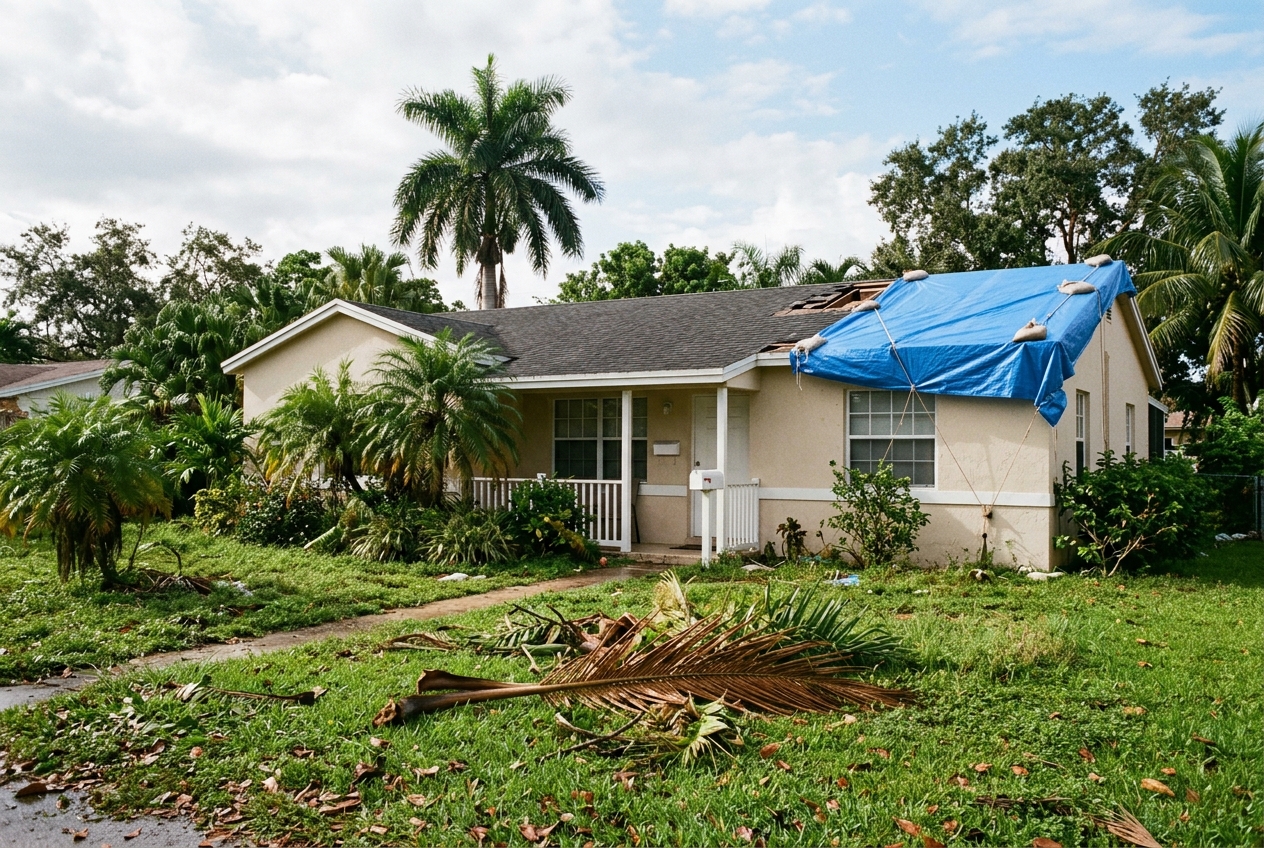
The storm went through. The tarp is on the roof, or it's not. The pool cage is in the neighbor's yard. There is water on the second floor and you are not sure if the drywall is going to come down on its own or wait for you to touch it.
You have a claim number. Maybe an adjuster came out. Maybe he did not. Somewhere in the back of your mind you already know that once the debris pickup rolls through the street, Miami-Dade Building & Neighborhood Compliance is going to be right behind it, taking pictures.
So the question is real. Do you fight the insurance claim, sit through the repair, and keep the house. Or do you take a cash as-is offer before the notice gets nailed to your door.
Here is the honest version.
What Actually Happens After a Miami-Dade Storm
The County gives you a grace period. It always does. For about four to eight weeks after a declared storm, BNC is triaging life-safety issues — collapsed roofs, exposed structure, downed service — and mostly leaving cosmetic damage alone.
Then the pictures start. Inspectors drive the same routes every week. Blue tarps get logged. Missing shingles get logged. Open soffits, broken windows boarded with plywood past 60 days, unpermitted roof work started by a handyman with a truck. All of it goes into a file with your folio number on it.
A first violation notice usually shows up 60 to 120 days after the storm. It gives you a cure window. Miss the cure window and you land on a Magistrate hearing calendar, typically 30 to 60 days out from the notice date.
The County does not want your house. The County wants compliance. But the system forecloses on liens anyway, quietly, every month.
The Insurance Fight Is Longer Than They Told You
If you are filing a claim, you already know it is a war. Under Florida Statute 627.70131, your carrier has 90 days after receiving notice of the claim to pay it or deny it. Most Miami-Dade homeowners I talk to are still fighting a year later.
The playbook is predictable. A low first offer. Depreciation on materials that were fine before the storm. A denial letter that cites your policy's cosmetic exclusion. Then a public adjuster or an attorney steps in and it turns into litigation.
Meanwhile, your roof is still open. Your permit clock is still running. Your BNC file is still building.
The Repair Path, What It Really Costs
Say you win the claim. Or say you have the cash. Now you are a general contractor.
You need a roofer licensed in Miami-Dade, not Broward. You need a permit pulled under your folio, which means a Notice of Commencement recorded at the Clerk's office if the job is over $2,500. You need windows that meet HVHZ code. You need an electrical inspection if the panel took water. You need someone to close the permits when they are done, because open permits are their own violation category and they follow the house at resale.
Best case, four to eight months and clean paperwork. Realistic case, nine to eighteen months, one contractor lien scare, and a stack of yellow tags on your fridge.
The Four Real Paths After Storm Damage
Every Miami-Dade homeowner staring at hurricane damage has the same four options. Not five. Not two. Four.
| Path | What it costs you | Timeline | Best for |
|---|---|---|---|
| Cure it | Deductible + cash gap + your time | 4-18 months | You have insurance money in hand and bandwidth to manage contractors |
| Fight the claim | Public adjuster fee (10-20%) or attorney contingency, plus waiting | 6 months to 2+ years | Damage is bad enough that litigation math actually works |
| Sell to HWV | A discount off retail | 7 days | You want out clean before BNC opens a file, or before the claim drags into year two |
| Ignore it | Compounding fines, liens, eventual foreclosure | 12-36 months to auction | Nobody. This is the path people take by accident. |
Cure it. Works if the claim pays fast, the contractor shows up, and you have the stomach for it. Most people underestimate the second mortgage of time this costs.
Fight it. Sometimes correct. If the denial is bad-faith and the damage is six figures, a good attorney takes it on contingency and you wait. You still have to keep the house from being coded during that wait, which nobody plans for.
Sell to us. Cash, seven days, as-is. We take the house with the damage, the open claim, the tarp, and the letter from the County if there is one. Any assignable claim proceeds get worked out at closing. You walk with a check and nothing follows you.
Ignore it. BNC opens a case. Fines accrue. On lot-clearing and unsafe-structure orders, Miami-Dade daily fines can hit $250 per day and compound until the lien attaches to the folio. Missed magistrate hearings become certified liens. Then the taxes lapse because you moved out. A tax certificate gets sold at the annual sale. Two years later the cert holder applies for a tax deed and the Miami-Dade Clerk schedules an auction 30-plus days out on the Clerk's website. Certificate of title issues 10 days after the sale. The house is gone. Whatever equity was there gets eaten by the County, the cert holder, and the attorney fees before you see a dollar.
What Most People Get Wrong
They think the insurance company is on their side. It is not. The adjuster's job is to close the file for as little as possible.
They think code enforcement will give them a pass because it was a storm. It will not. BNC gives you the grace period and then treats your file the same as any other.
They think they can keep the tarp on for a year. In Miami sun and rain, a blue tarp is a 90-day tarp. After that the water gets under it, the sheathing rots, and now you have a mold job on top of the roof job.
They think selling as-is means for pennies. It does not. A cash as-is offer prices the risk of the damage and the paperwork. It is usually more than people expect once they subtract the deductible, six months of holding, contractor markup, and the public adjuster fee they were about to pay.
What Six More Months of Waiting Looks Like
You get the first BNC notice. You put it on the counter with the mail. The cure window passes. A magistrate hearing gets set 45 days out. You do not go because you are at work. A lien attaches to your folio for the base fine plus daily accrual.
The insurance claim is still open. Your attorney says another few months. Your contractor stopped answering. Your tarp is leaking.
You get a courtesy call from someone offering to buy the house. You say no because you think you can still fix it.
Six months later the taxes are late. Twelve months after that a tax certificate is sold. Two years after that the cert holder applies for a tax deed. The Clerk posts the auction with at least 30 days notice. The house sells for taxes owed plus the opening bid. Whatever is left after the County, the cert holder, and the attorneys is your surplus. Which you have to file for. Which most people never do.
That is the ignore path. It is the most common one. Nobody chose it. Everyone ended up on it.
When Selling to Us Actually Makes Sense
If the claim is heading to litigation and you cannot wait. If the damage is worse than the payout will cover. If you are older and the idea of managing a roofer for six months is not a fight you want. If you do not live in the house anymore. If code enforcement has already opened a file. If you have real equity and you would rather keep it than watch it get chewed down by fines and interest.
We close in seven days. Title company of your choice or ours. We handle the open claim, the open permit, the open code case. You bring what you have. We deal with the rest.
Sources
- Miami-Dade Building and Neighborhood Compliance — the County department that inspects, cites, and schedules Magistrate hearings on code violations.
- Miami-Dade Clerk of Court Tax Deed Sales — where scheduled tax deed auctions are posted with dates, folios, and minimum bids.
- Florida Statutes Chapter 197 — Tax Collections — governs tax certificate sales, tax deed applications, and the certificate-of-title timeline.
- Florida Statutes § 627.70131 — Insurer's Duty After a Claim — the 90-day insurer pay-or-deny rule for residential property claims.
- Florida Bar Consumer Pamphlet Library — plain-English legal background on Florida homeowner rights and hurricane claim procedure.
If you want a real number on the house, call. If you want to fight the claim first, fight the claim. I have bought hundreds of these in Miami-Dade with tarps still on the roof and a BNC file already open. The math is usually better than people expect, and worse the longer they wait.
— Maurice