
Little Havana Unpermitted Addition: Fix It or Sell It (Real Math)
Open permit or unpermitted addition in Little Havana? Here's the real cure-vs-sell math, the County timeline, and your four honest options.
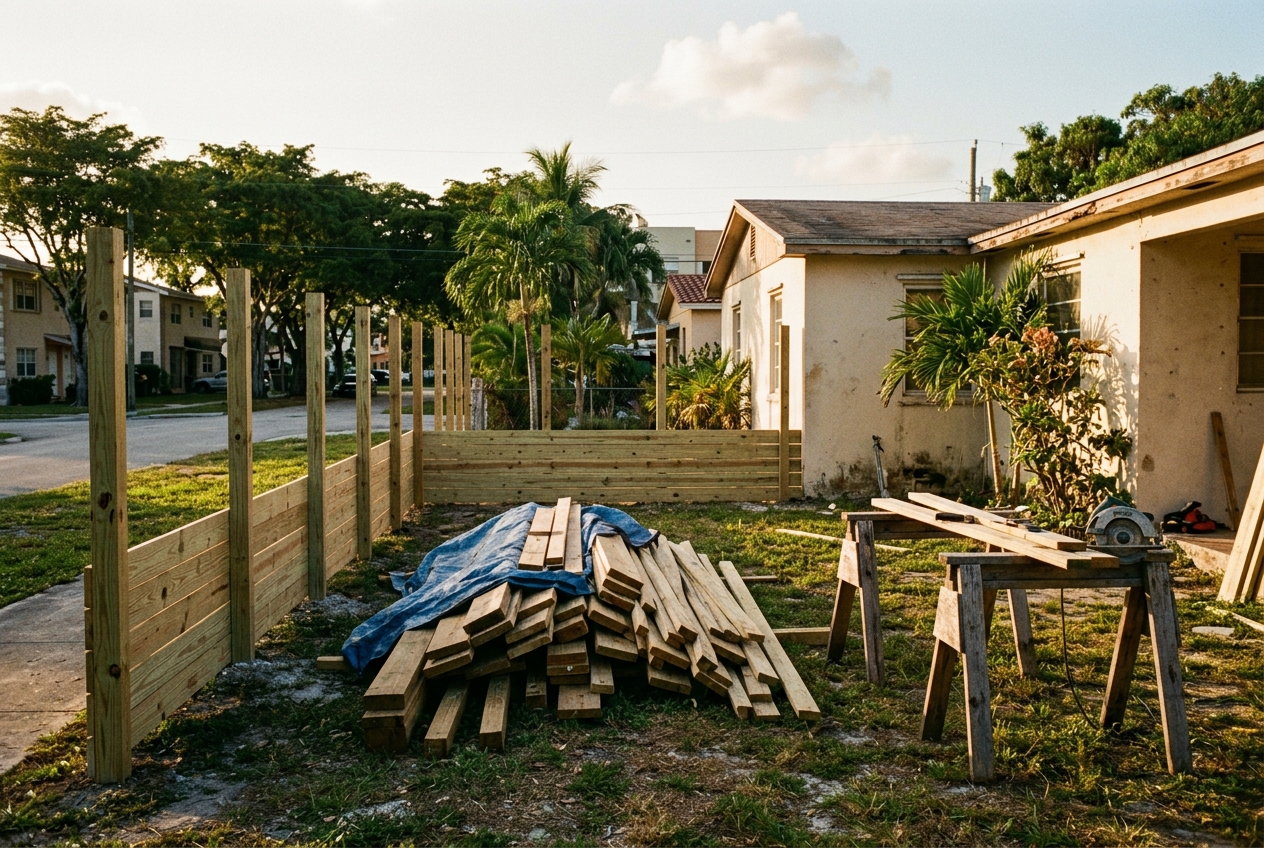
You're sitting in the kitchen in a 1940s bungalow off SW 8th, maybe near Calle Ocho, maybe closer to the river. Somebody, your dad, your tio, the previous owner, closed in the Florida room in 1998. No permit. Now you want to sell, or refinance, or pass it to your kids, and the title work flagged it. Or worse, somebody complained and BNC opened a case.
You already know the addition is solid. It's been standing for 25 years. The roof doesn't leak. That's not the point. The County doesn't care that it's solid. The County cares that there's no record of it.
So now you've got a choice to make, and the math on that choice is not what most people think it is.
What an "open permit" or "unpermitted addition" actually means in Miami-Dade
There are two flavors of this problem, and they hit Little Havana houses constantly.
Flavor one: open permit. Somebody pulled a permit years ago, did the work, and never called for the final inspection. The permit just sits there, open, sometimes for 20 years. Nothing happened to the house. The paperwork is the problem.
Flavor two: unpermitted work. No permit was ever pulled. The Florida room, the carport conversion, the back-of-house bedroom, the bathroom in the garage. None of it exists on the County's records. The square footage on the folio doesn't match what's actually standing there.
Miami-Dade tracks both through the Building Department and through Building & Neighborhood Compliance (the County renamed Code Enforcement to BNC a few years back, same office, same people, new sign). If a complaint comes in, or if a permit search turns it up during a sale, you're now in a case.
The Little Havana wrinkle
The core of Little Havana, the streets between SW 4th and SW 16th, is half pre-1960 housing stock. A lot of these houses were built before modern setbacks, before the Florida Building Code, before half the rules that now apply. That cuts both ways.
It's good because you may qualify for relief on legacy non-conformities. It's bad because once you open a permit to legalize the addition, an inspector walks the whole property. Plumbing from 1956. Knob-and-tube in a back room. A panel that should have been replaced in 1992. Whatever they find, you now own.
Opening a permit to legalize one room is sometimes how a homeowner ends up owing $40,000 on a house they were going to sell for $380,000.
That's the trap. The cure path is not a flat fee. It's a doorway.
The realistic timeline if you cure
Let's say you decide to legalize. Here's what actually happens, not the brochure version.
You hire a contractor and an architect or engineer to draw as-builts. Drawings take 4 to 8 weeks if your guy is fast and not busy. You submit to Miami-Dade Building. Plan review takes 6 to 12 weeks depending on backlog. They almost always come back with comments. You revise. You resubmit. Another 4 to 8 weeks.
Now inspections. Foundation if they can verify it. Framing if they can open the walls. Electrical. Plumbing. Mechanical. Final. Each one is a separate visit, and each one can fail.
If BNC has an active case, you're also running on a magistrate clock. Code magistrate hearings in Miami-Dade are typically scheduled 30 to 60 days after the notice of violation. If you can show you've pulled the permit and you're working in good faith, the magistrate will usually grant you a compliance window. If you don't, you're looking at fines that can run up to $250 per day depending on the violation class, and they keep running until you comply or the magistrate stops the clock.
Realistic total: 6 to 14 months. Real money: $18,000 to $60,000+, depending on what the inspector finds when the walls open.
The four real paths
Here are the four things you can actually do. Not five. Not three. Four.
| Path | What it looks like | Time | Real cost / outcome |
|---|---|---|---|
| Cure it | Hire architect, pull permit, open walls, fix what fails, final inspection | 6–14 months | $18K–$60K+ out of pocket, but you keep the house and a clean folio |
| Fight it | Magistrate hearing, argue legacy status, hardship, or wrong notice | 30–90 days | Lawyer $1.5K–$5K, sometimes the right move, rarely a full win |
| Sell to us | HWV closes in 7 days, cash, as-is, open permit and BNC case come out at closing | 7 days | One number, no inspector walking your house, no surprise scope |
| Ignore it | Do nothing. Hope nobody notices. | Months to years | Fines compound. Lien attaches. Eventually the County or a tax cert holder forecloses. |
What "ignore it" actually costs in Little Havana
Most people reading this have been ignoring it for a while. No judgment. I get it. The notice came, you stuck it in a drawer, life moved on.
Here's what's quietly happening while it sits in the drawer.
If BNC has a case and you missed the magistrate hearing, an order was entered. A lien attached to the property. The fines, often $100 to $250 a day, keep accruing. In two years, that's six figures on a $300K house.
Meanwhile, if you also stopped paying property taxes (it happens together more than you'd think), a tax certificate gets sold on your folio every June. After two years, the cert holder can apply for a tax deed. Miami-Dade tax deed sales are listed on the Clerk's website, scheduled 30+ days after the certificate holder applies, and once the certificate of title issues, you have 10 days before the new owner takes possession.
Nobody comes and warns you the day the auction is scheduled. You find out when someone knocks on the door.
The cure-vs-sell math, written out
Let's do the math the way I do it at the kitchen table.
Take a Little Havana 3/2, roughly 1,400 square feet on a 5,000 square foot lot, market value clean and permitted at $480,000. Now subtract the realities.
- As-builts, architect, engineer: $4,500
- Permit fees and impact: $2,800
- Bringing the addition to code (electrical, plumbing, hurricane straps, insulation, drywall): $22,000
- Inspector-driven scope on the rest of the house (panel upgrade, re-pipe a wet wall, two windows that don't meet code): $14,000
- Holding costs over 9 months (taxes, insurance, utilities, your time): $9,000
- Realtor commission and closing costs when you finally sell: $33,000
That's roughly $85,000 to get to a clean retail sale. You net somewhere near $395,000, assuming nothing goes sideways. Things go sideways.
Now the as-is cash offer from someone like us is going to come in lower than $480,000. Of course it is. We're taking the open permit, the unpermitted square footage, the BNC case if there is one, and the risk of what's behind the drywall. But we're also taking the 9 months, the inspector, the contractor delays, and the holding costs off your back. The number we hand you is a number you keep.
When you compare net to net, not gross to gross, the gap is usually smaller than people expect. Sometimes the cash offer wins outright. Sometimes the cure still wins by $30K and the answer is cure. Honest math goes both ways.
What most Little Havana homeowners get wrong
They think the answer is the same for everyone. It isn't.
If you have cash, time, a contractor you trust, and you plan to live there another 20 years, cure it. That's the right call. Your folio gets clean and your house gets safer.
If you're a kid who inherited the house from your grandmother, you live in Tampa, the addition was built in 1991 by a cousin, and you want this resolved by Thanksgiving, you are not the right buyer for a 9-month permit project. Sell it. Take the net. Move on.
The mistake is starting the cure path and quitting halfway. Now you have an open new permit on top of the old problem, and the County knows you exist. That's the worst of all worlds.
What happens if you wait six more months
The fines keep running, if there's an active case. The next tax bill posts in November. If you're already behind, that compounds. If a neighbor filed the original complaint, they sometimes file again when nothing happens, and that escalates the case classification.
Nothing about waiting makes the math better. It only makes the number we can pay smaller, because we're absorbing more of the accrued problem.
Sources
- Miami-Dade Building & Neighborhood Compliance — confirms County structure for code enforcement and permit compliance.
- Miami-Dade Clerk of Courts: Tax Deed Sales — confirms the tax deed application and auction scheduling process.
- Florida Statutes Chapter 197 — Tax Collections, Sales, and Liens — the statute governing tax certificates and tax deed sales.
- Florida Statutes Chapter 162 — County or Municipal Code Enforcement — sets the framework for code enforcement boards, magistrates, and fine accrual.
- Miami-Dade Permit Search (Building Department) — where open permits and case history on a folio can be looked up.
If the math says cure, cure. If the math says sell, call me and I'll put a real number on it the same afternoon. The County clock doesn't care which one you pick. It just keeps running.
— Maurice