Miami-Dade Code Compliance Notice: What It Means and Your Four Options
You got a Miami-Dade code compliance notice. Here's what it actually says, the real deadlines, the fine math, and the four real options you have.
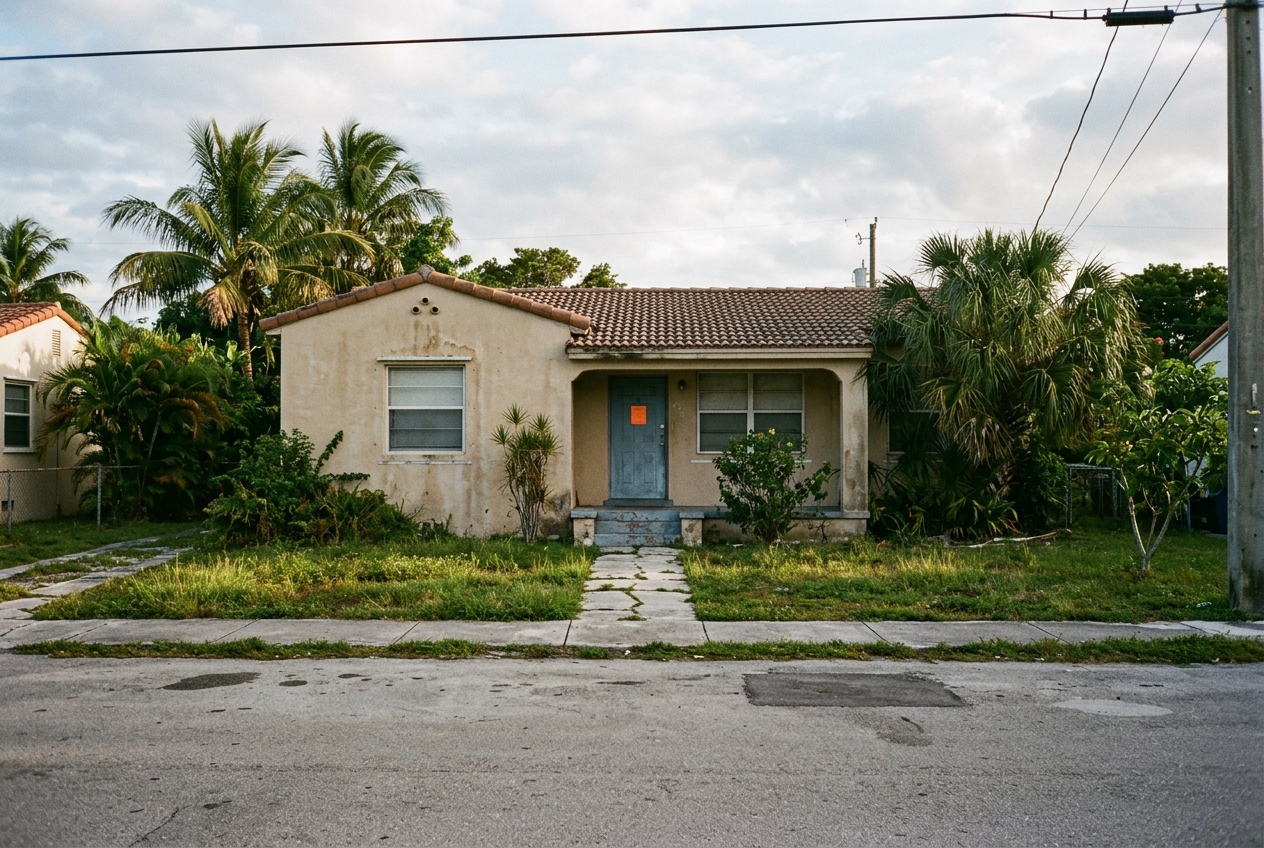
You opened the envelope. Or somebody taped it to the door. Or a neighbor called you in Ohio and told you a County inspector was standing in your yard.
Whatever the delivery, the paper says something like Notice of Violation or Courtesy Notice or Civil Violation Notice, and it has a case number, a folio, and a deadline. It probably references a chapter of the Miami-Dade County Code you have never read.
Before you do anything, take a breath. The notice is not a bill yet. It is the County starting a clock. What you do in the next 30 to 60 days decides whether this stays cheap or turns into a lien that follows the property.
What Miami-Dade Code Compliance actually is
The County renamed Code Enforcement a few years back. It is now called Building and Neighborhood Compliance, or BNC. Same job, new letterhead. They enforce the County Code across unincorporated Miami-Dade and, by interlocal agreement, parts of some municipalities.
BNC handles the stuff you can see from the street. Overgrown lots. Junk vehicles. Unpermitted additions. Illegal units. Roof tarps that have been up for two years. Fences past the setback. Boats in the front yard. Sheds nobody pulled a permit for.
They also handle the stuff you cannot see from the street once a neighbor complains. Unpermitted electrical. A converted garage that is now a bedroom. An efficiency in the back with its own meter.
The notice you got means an inspector opened a case tied to your folio. It is now in the system.
The realistic timeline
Here is roughly how these move. Not every case follows the exact same path, but this is the shape of it.
| Stage | What happens | Rough timing |
|---|---|---|
| Courtesy notice | Inspector flags the violation, gives you time to fix | 10 to 30 days to comply |
| Civil violation notice | Formal notice with a case number and hearing date | Issued if courtesy is ignored |
| Magistrate hearing | Special Magistrate hears the case, issues an order | 30 to 60 days out |
| Compliance order | Order to cure by a set date, with daily fines if you miss it | Fines start accruing after the deadline |
| Lien recorded | The order gets recorded against the folio | Once fines hit a threshold |
| Foreclosure or forced sale | County or a buyer of the lien forces the sale | Months to years later |
Daily fines on County-Code cases commonly run up to $250 a day for a first violation and higher for repeats. Lot-clearing and nuisance-abatement cases run at that same $250 tier and compound fast because nobody watches the mail.
The County does not want your house. The County wants compliance. But the system forecloses on liens anyway, quietly, every month.
Read the notice before you do anything else
Four things to find on the paper:
- The case number. Starts with a year. Write it down.
- The folio. 13 digits. Confirms which parcel this is about. If you own more than one, make sure it is the one you think it is.
- The code section cited. Something like Chapter 19, Chapter 33, Chapter 8-11. That tells you what kind of violation.
- The compliance deadline or hearing date. This is the clock.
If the hearing date is already on the notice, you are past the courtesy stage. Do not skip that hearing. Missing it means the Magistrate rules without you and the compliance order lands with fines built in.
Your four real options
There are four. Everything else is a variation of one of these.
| Option | What it costs you | When it makes sense |
|---|---|---|
| Cure it | Contractor, permits, time, fines paid to date | You have the cash, the bandwidth, and the property is worth it |
| Fight it | Time, sometimes a lawyer, a hearing prep | The notice is wrong, or you need a real extension |
| Sell to us | Nothing out of pocket. Lien and fines come out at closing | You want out. Seven days, cash, as-is |
| Ignore it | Fines compound, lien attaches, eventually forced sale | Never a good plan, but the most common path by accident |
Cure it
Hire the right trade. Pull the permit. Pass the inspection. Pay any fines that already accrued. If the violation is a lot full of debris, get a hauler out and photograph the clean lot for the re-inspection.
Curing is clean when the numbers work. It gets ugly when the cure requires opening walls to legalize old work, or when you find out the original construction never had a permit at all. Then cure becomes gut-and-restart.
Fight it
You have the right to appear at the Special Magistrate hearing and contest the violation. Bring photos. Bring receipts. Bring the permit history if you have it. If the inspector misread the setback or cited the wrong chapter, the Magistrate can dismiss it.
Fighting is also the move when you need time. A Magistrate can grant an extended compliance period if you show a real plan and real progress. Not a speech about how you have been busy.
Sell to us
Help With Violations closes in seven days for cash, as-is. The lien pays at closing from the sale proceeds. The fines pay at closing. Back taxes, open permits, whatever else is attached to the folio, all handled through the title company.
You do not fix anything. You do not clean anything out. You do not show up to a hearing. You get a net number, you decide yes or no, and if it is yes you sign and you are done.
This is the right call when the cure cost is bigger than the equity, or when you inherited a house 1,400 miles away and cannot manage a Miami contractor from there, or when the property has been a slow bleed for years and you are ready for it to stop.
Ignore it
This is the path most people take without deciding to. The notice goes in a drawer. The hearing happens without you. The compliance order lands. Fines accrue at $250 a day. The lien records. Interest runs.
Eventually one of two things happens. The County or a lien buyer forecloses on the code lien. Or, if the taxes were also unpaid, a tax certificate holder applies for a tax deed sale, and the Miami-Dade Clerk schedules the auction at least 30 days out on their online auction site. The house sells. The Clerk pays the taxes, the cert holder, the code lien, the attorneys, and the auction costs first. Whatever is left goes to you as surplus, if you file for it. Usually there is nothing left.
What most people get wrong
They think the notice is a threat and not a schedule. It is a schedule. Every date on it matches a step in a process the County runs thousands of times a year. Nobody is angry at you. Nobody is going to make an exception because of what is going on in your life. The steps just happen.
They also think curing is always the answer. Sometimes it is. Sometimes the property is worth $280,000, the cure is $95,000, the back taxes are $18,000, the code lien is already $22,000, and the seller is 74 years old and lives in Georgia. Cure is the wrong answer there. Sell is the right answer.
What happens if you wait six more months
Six more months at $250 a day is another $45,000 on the lien. Plus whatever the taxes did. Plus whatever a second violation adds when the inspector comes back and sees nothing changed.
Six months is also long enough for a tax certificate holder to apply for the deed and for the auction to be scheduled. Once the sale date is posted on the Clerk's site, your window to sell privately gets very narrow. Title companies get nervous. Buyers walk. The only offer left is often the cert holder's, at a number that reflects their leverage.
Sources
- Miami-Dade Building and Neighborhood Compliance (BNC) — confirms the department name, scope, and civil-violation process.
- Miami-Dade Clerk of Courts — Tax Deed Sales — confirms tax deed auctions are scheduled and conducted online after the certificate holder applies.
- Florida Statutes Chapter 162 — County or Municipal Code Enforcement — sets the statutory framework for Special Magistrate hearings and daily fines up to $250 for first violations.
- Florida Statutes Chapter 197 — Tax Collections, Sales, and Liens — governs tax certificates, tax deed applications, and surplus funds.
- The Florida Bar Consumer Pamphlet: Buying a Florida Home — general consumer reference on Florida real estate transactions and liens.
If you want a real number on the property, call. I will run the folio, pull the case, look at the taxes, and give you a net you can decide on the same day. If you want to try to cure it, cure it. If you want to fight it, fight it. The one option that never gets cheaper is waiting.
— Maurice