Westchester Open Permit: Why You Can't Sell and What to Do
Open permit on your Westchester home blocking the sale? Here's what it means, what it costs to fix, and your four real options. Honest Miami-Dade advice.
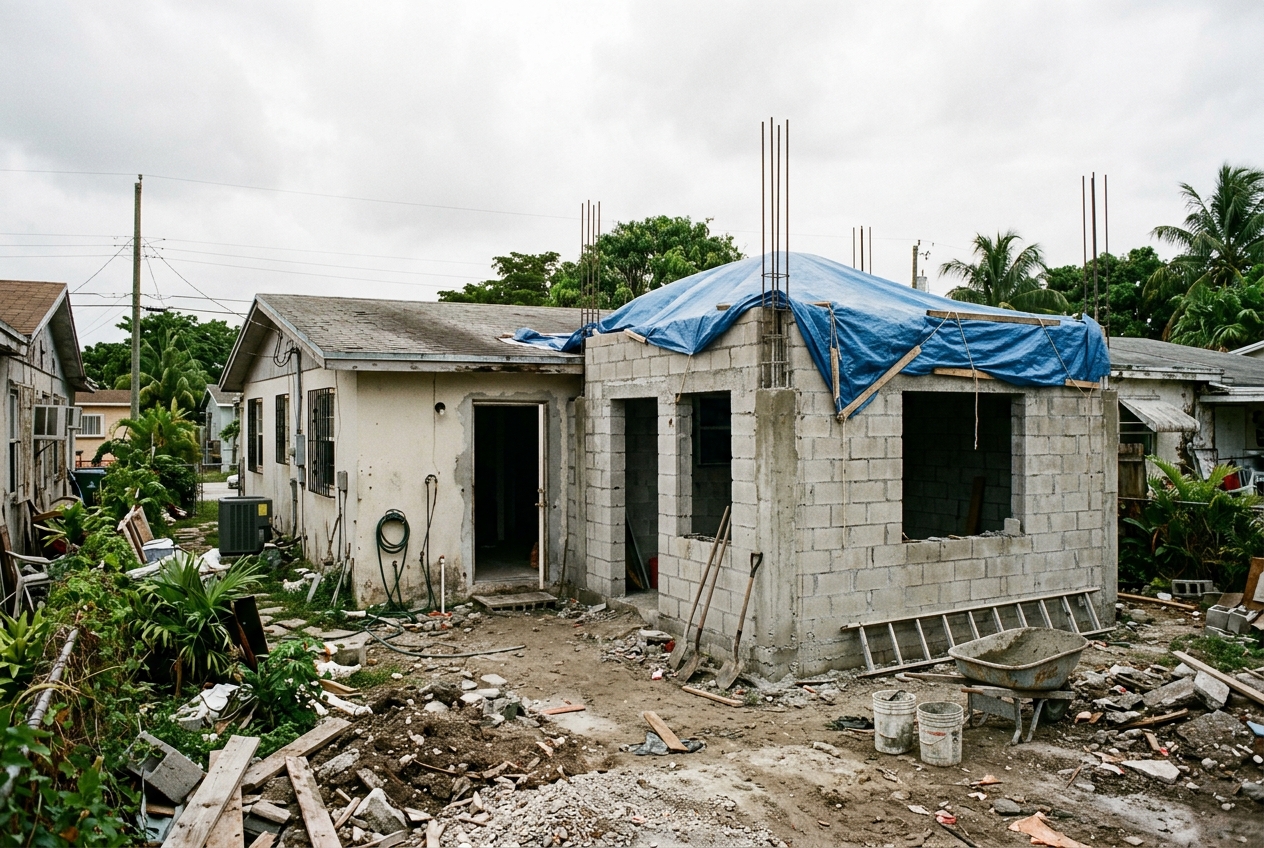
You got the offer. You signed the contract. Then the title company called and said there's an open permit on the property. Maybe from 2009. Maybe from your father-in-law's pool deck. Maybe from a roof job the previous owner never closed out.
The buyer is nervous. The lender is asking questions. The clock on your contingency period is ticking. And now you're up at 11pm searching "Westchester open permit cannot sell house" because nobody told you this was a thing.
It's a thing. It's one of the most common reasons a Miami-Dade sale falls apart at the closing table. Let me walk you through what's actually happening and what you can do about it.
What an open permit actually is
An open permit is a permit that was pulled with Miami-Dade County (or the City, if you're in an incorporated pocket, but most of Westchester is unincorporated, so it's County) and never closed out. Somebody applied for it. Maybe a contractor, maybe the owner. Work may or may not have been done. Final inspection never happened. The permit just sits there, open, attached to your folio, forever.
It doesn't go away on its own. Permits used to expire in Florida; that's not really how it works anymore. An expired permit and an open permit are not the same thing. Either way, title companies see it on the County permit search and they will not insure clean title until it's resolved.
That's the whole problem in one sentence. The buyer's title insurance won't issue without resolving the permit. No title insurance, no closing.
Why this hits Westchester especially hard
Westchester is full of houses built in the 60s and 70s that have been added onto, re-roofed, re-windowed, re-pooled, and re-AC'd four or five times over. A lot of that work was done before contractors got religious about closing permits. Some of it was done without a permit at all, which is its own problem. We'll get there.
When the County rebuilt its online permit search a few years back, a lot of old open permits surfaced that nobody had thought about in decades. Roof permits from 1998. Pool screen enclosures from 2003. Hurricane shutter permits from after Wilma. Garage conversions that were never inspected.
If your house is in Westchester and you've owned it more than fifteen years, the odds you have an open permit somewhere are not low. The odds you knew about it until the title company flagged it are.
The realistic timeline once you list
Here's what most sellers don't understand. Resolving an open permit isn't a phone call. It's a process. And the County is not in a rush.
| Step | Realistic timeline |
|---|---|
| Pull the permit history and figure out what's actually open | 1-2 weeks |
| Find a licensed contractor willing to take over an old permit | 2-4 weeks |
| Schedule and pass final inspection (if the work is up to code) | 2-6 weeks |
| After-the-fact permit if the work doesn't meet current code | 2-6 months |
| Demolish and re-do work that fails inspection | 3-9 months |
Best case, you're looking at six weeks. Realistic case for a 20-year-old open permit on a pool enclosure that doesn't meet current wind codes, you're looking at three to six months and a five-figure bill.
Most buyers don't wait three months. Most lenders won't extend a rate lock that long. The deal dies, you re-list, and the next buyer's title company finds the same permit.
The County does not want your house. The County wants the permit closed. But the system blocks every sale until you close it, quietly, every week, in every zip code in Miami-Dade.
Your four real options
Here's how it actually breaks down for a Westchester open-permit situation. None of these are pleasant. One of them is honest.
| Path | What it costs | What it takes | When it makes sense |
|---|---|---|---|
| Cure it | $3K-$40K+ depending on the work and after-the-fact fees | 2-9 months, contractor coordination, possible re-build | You have cash, time, and the original work was up to code |
| Fight it | Lawyer fees, your time at hearings | 30-60 day Magistrate hearing window, longer if appealed | The permit isn't actually yours, or there's a County error in the file |
| Sell to HWV | Nothing out of pocket; closing costs come from proceeds | 7 days, cash, as-is | You want out and don't want to manage a contractor through hurricane season |
| Ignore it | Slow bleed: lost sale, deferred until the next attempt | Indefinite, until you try to sell again or refinance | Almost never the right answer, but it's what most people end up doing |
A note on after-the-fact permits. Miami-Dade charges a multiple of the original permit fee, often four times, when work was done without a permit or never closed out. On a $400 original permit, the after-the-fact comes in around $1,600 before you even pay the contractor. That's before the inspector flags anything that doesn't meet current code, which is almost always something on work this old.
What most Westchester sellers get wrong
The first mistake is thinking the buyer can just sign a waiver. Buyers can't waive title insurance requirements. The lender requires the title policy. The title underwriter requires the permit closed. There is no waiver path for a financed buyer.
The second mistake is thinking a cash buyer solves it. Some cash buyers will close subject to an open permit. Real ones do this every week. Retail cash buyers, the ones who found you on Zillow, usually back out the moment they hear "open permit" because their attorney told them it's a future code-enforcement liability.
The third mistake is calling the original contractor. If the permit is more than a few years old, the contractor is probably retired, dead, or no longer licensed. Even if they're still around, they have zero incentive to drive to your house, take legal responsibility for 15-year-old work, and put their license on the line for free.
The fourth mistake is trying to close the permit yourself as the homeowner. You can, technically. You pull an owner-builder affidavit and take on the inspection liability. You also take on every code violation the inspector finds. People do this and then spend the next year arguing with Building and Neighborhood Compliance, what the County used to call Code Enforcement before they renamed it BNC.
What happens if you wait six more months
Your sale falls through. You re-list. The next buyer's title company finds the same permit. Same problem.
Meanwhile, if BNC noticed the work and opened a separate code case (this happens, especially with visible work like additions and pools), you're now accruing fines. Miami-Dade BNC daily fines can run up to $250 a day on certain violations, and the clock doesn't stop because you're "working on it."
If the fines hit a lien, the lien attaches to the folio. If the lien sits long enough, the County can foreclose. Tax bills go unpaid because you mentally checked out of the property. The tax certificate holder eventually applies for a tax deed, the Clerk schedules the auction on miamidadeclerk.gov 30 or more days after the application, and a certificate of title issues to the winning bidder ten days after the sale.
That's the slow version. Most people don't go all the way there. Most people just live with a house they can't sell, watching it become less sellable every year.
How we handle this at HWV
We buy Westchester houses with open permits, with expired permits, with un-permitted additions, with code cases, and with any combination of the above. We close in seven days, cash, as-is. We handle the permit closeout after closing on our dime. That's our problem, not yours.
What you net is the offer minus closing costs and any liens that have to come off at closing. You don't pay the contractor. You don't pay the after-the-fact fees. You don't sit through Magistrate hearings.
If the permit is fixable cheap, you should fix it and sell retail. You'll net more. If the permit is going to cost $25K and four months you don't have, call us. The math usually works out closer than people expect once you add up the holding costs of a delayed sale.
Sources
- Miami-Dade Building Department — confirms the permit search, inspection, and closeout process for unincorporated Miami-Dade.
- Miami-Dade Clerk of Courts: Tax Deed Sales — the Clerk's site lists scheduled tax deed auctions and confirms the certificate-holder application process.
- Florida Statutes Chapter 553 (Building Construction Standards) — Florida Building Code authority that governs permitted work and inspections.
- Florida Statutes Chapter 489 (Contractors) — governs licensed contractors, owner-builder affidavits, and permit responsibility.
- The Florida Bar Consumer Information — consumer protection resources including real estate transaction guidance.
If the buyer is wavering and you can fix the permit before the contingency expires, fix it. If you're staring at a four-month contractor timeline and a buyer who's already mentally moved on, give me a call. I've bought a hundred of these in your zip code. The math is usually better than people expect, and worse the longer they wait.
— Maurice