What Is Miami-Dade Code Compliance? Deadlines and Your 4 Options
A Miami-Dade code compliance notice on your door. What it means, the real deadlines, the daily fines, and the four options you actually have right now.
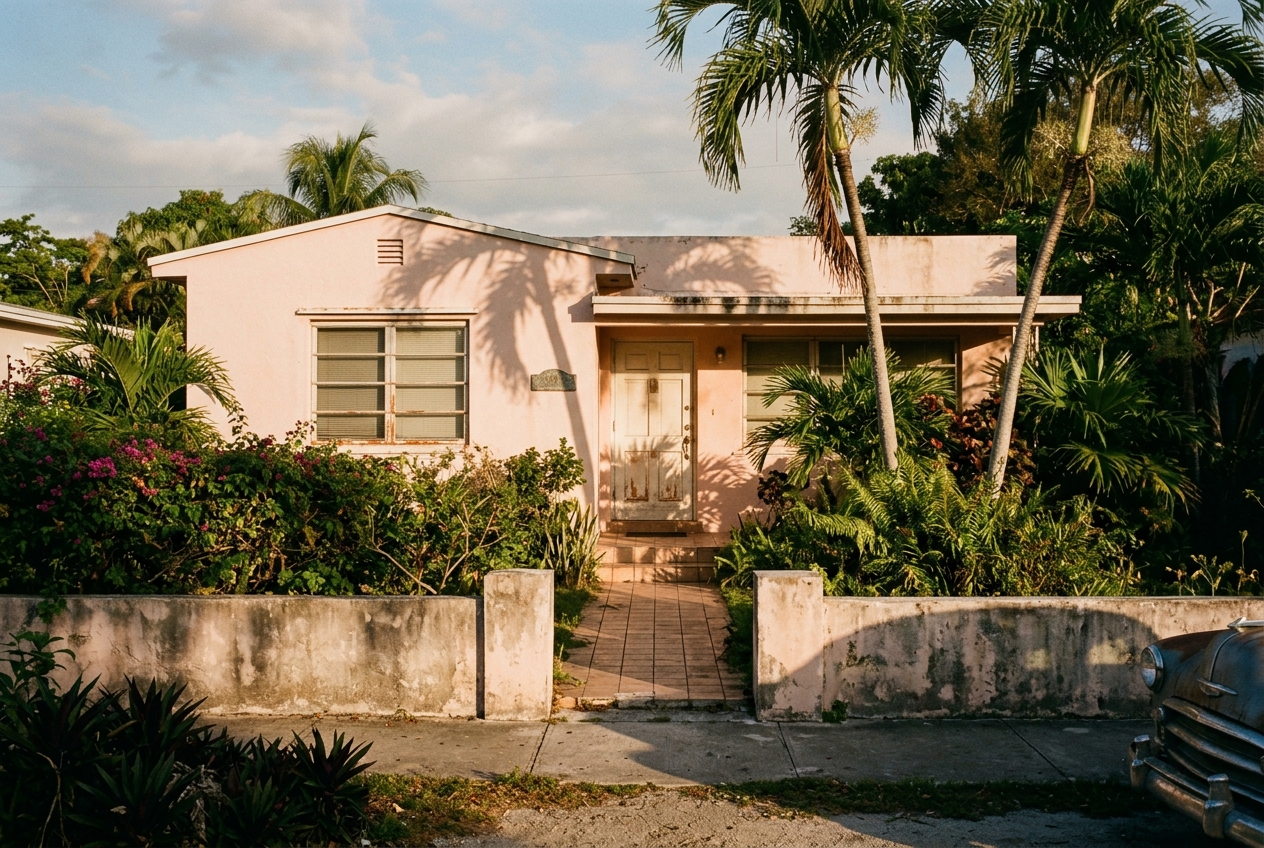
You found a notice taped to the door, or folded into the mail, or stuck to the fence. It has a case number, a folio, and a paragraph of language that reads like it was written by someone who has never lost sleep over anything.
You are probably reading this at night. You are probably not sure if this is serious yet, or how serious, or how long you have before it becomes something worse.
Here is what the notice actually is, what the County actually wants, and the four options you actually have. No fluff. I buy houses like yours for a living in Miami-Dade, so I see these every week.
What Miami-Dade Code Compliance Actually Is
Miami-Dade County used to call it Code Enforcement. A few years back the County renamed the department to Building and Neighborhood Compliance, or BNC. Same job, mostly. They inspect properties for violations of the County code and issue notices when something is out of compliance.
BNC handles the classic stuff. Overgrown lots. Unpermitted work. Unsafe structures. Illegal additions. Junk vehicles. Trash and debris. Fences that never got a permit. A shed that grew into a bedroom. A carport that got walled in ten years ago and nobody ever pulled paper on it.
If you are inside a municipality like Hialeah, Miami Beach, Homestead, or the City of Miami, your local code enforcement is separate from BNC. Same idea. Slightly different forms. Same daily fines when things go sideways.
What the Notice Actually Says (In Plain English)
Most first notices are a Notice of Violation. It tells you what the County thinks is wrong, cites the section of code, and gives you a compliance date. That compliance date is the one to circle.
If you cure the violation by that date, the case usually closes with no fine. If you don't, the case moves to a magistrate hearing. That is where fines start.
Read the compliance date on the notice before anything else. Everything downstream is timed off that one line.
The second notice you might see is a Notice of Hearing. This is the one that puts you on the magistrate's calendar. Miami-Dade magistrate hearings are typically scheduled 30 to 60 days out from the notice. You can appear, bring photos, ask for more time, or dispute the violation.
If you don't show up, the magistrate rules without you. That is almost never good.
The Real Deadlines and the Real Fine Math
Once a magistrate finds a violation, an order gets entered with a daily fine that starts running until you cure. The rates vary by violation type, but a few numbers are worth knowing.
| Violation type | Typical daily fine | How fast it stacks |
|---|---|---|
| Lot clearing, overgrowth, debris | Up to $250/day | $7,500 in 30 days |
| Unsafe structure, structural | Up to $500/day | $15,000 in 30 days |
| Repeat violation | Up to $5,000/day | Life-changing in a week |
| Irreparable / irreversible harm | Up to $15,000 flat | One shot, big number |
Those numbers come from the County's own fine schedule under Section 8CC of the Miami-Dade code. They are not theoretical. I have seen $80,000 in lot-clearing fines on a vacant parcel in Goulds because a family member passed and nobody was reading the mail for two years.
The fine keeps running until the violation is cured and the case is re-inspected and closed. Paying it off later does not erase it. It becomes a lien on the property.
Your Four Options. All Four Are Real.
Most people I sit down with think they have two options: pay the contractor or wait it out. There are actually four.
| Option | What it looks like | Who it fits |
|---|---|---|
| Cure it | Hire contractor, pull permits, pay fines, get re-inspected | You have cash, time, and bandwidth |
| Fight it | Show up at magistrate, dispute, request extension | Notice is wrong, or you need runway |
| Sell to us | Cash close in 7 days as-is, County debts paid at closing | You want out clean, no repairs |
| Ignore it | Do nothing | Almost nobody, but most people pick it anyway |
Cure it. You hire a licensed contractor, pull permits at the Regulatory and Economic Resources office, do the work, request a re-inspection, and pay whatever fines accrued. Works well when the fix is small, the fines are small, and you have the cash. Works badly when there is an open permit from 1998 you didn't know about, or the structure is not permittable, or the contractor bids come in at $60,000.
Fight it. You show up at the magistrate hearing. You bring photos. You bring evidence. You ask for more time, or you dispute the finding. Magistrates in Miami-Dade generally give homeowners some rope on a first offense, especially with a real hardship story. Sometimes you win. Sometimes you get 60 or 90 more days. Sometimes you lose and the daily fine backdates to the compliance date on the original notice. Bring a real answer, not a shrug.
Sell to us. This is what I do. Help With Violations buys the property as-is for cash, closes in about seven days through a Miami-Dade title company, and the County debts, the fines, the back taxes, the open permits all come out of the closing statement. You walk away with the net check and no more mail from the County. Works when the math on curing is worse than the math on selling, or when you just don't want the fight anymore.
Ignore it. This is the path most people accidentally take. The fine compounds every day. The magistrate order becomes a lien recorded against the property. If back taxes are also unpaid, a tax certificate gets sold and eventually the cert holder can apply for a tax deed, which schedules an auction on the Miami-Dade Clerk's website roughly 30 or more days out. If the County lien is large enough, the County itself can foreclose the lien. Either way, the house sells at auction, the County and the cert holder and the attorneys get paid first, and you get whatever is left. Usually nothing.
What Most People Get Wrong
They think the notice is a warning shot and nothing happens for a year. Something does happen. The fine clock starts on the compliance date printed on the notice, not on the day you finally read it.
They think paying the fine later erases it. It doesn't. Once the magistrate enters the order, it is a lien. Curing the violation stops the fine from growing. It does not delete what already accrued unless you negotiate a reduction through the County's fine mitigation process, which is a separate application with its own hearing.
They think an open permit from a previous owner is not their problem. It is. Open permits attach to the property, not the person. When you try to sell traditionally, the title company will flag it and the buyer's lender will not close.
They think selling with a lien is impossible. It is not. It closes every week in this county. The title company pulls a payoff, the lien gets satisfied at closing, and the deed records clean.
What Happens if You Wait Six More Months
Six months of lot-clearing fines at $250 a day is $45,000. Six months of unsafe-structure fines at $500 a day is $90,000. On a lot in Brownsville or West Little River where the land itself is worth $110,000, that math ends the deal.
If property taxes are also behind, the tax certificate holder can apply for a tax deed after two years from the certificate date. Once they apply, the Clerk schedules the auction. From the moment the deed application posts, you generally have a little over a month before the sale.
At the auction, the property sells to the highest bidder. Any surplus funds go into the Clerk's registry, and heirs and lienholders line up to claim them. What lands in your account after the County, the cert holder, and the attorneys take their share is usually a rounding error compared to what the property was worth six months earlier.
Sources
- Miami-Dade Building and Neighborhood Compliance — the department that issues county code violations and runs magistrate hearings.
- Miami-Dade Code Section 8CC (Schedule of Civil Penalties) — the fine schedule for code violations, including lot-clearing and structural.
- Miami-Dade Clerk of Courts Tax Deed Sales — the official auction calendar and rules for tax deed sales in the county.
- Florida Statutes Chapter 197 — Tax Collections, Sales, and Liens — governs tax certificates, tax deeds, and the timeline from delinquency to auction.
- Florida Bar Consumer Pamphlet: Buying a Florida Home — general consumer guidance on liens, title, and closings in Florida.
If you want a real number on the property, call. I will run the math on curing versus selling and tell you which one wins, honestly, even if it isn't me. The one thing I will not do is tell you the clock isn't running. It is.
— Maurice